
In Yerevan, Armenia, the Centre of Excellence for Destinations (CED) made its mark at the 17th Conference of the Parties to the Convention on Biological Diversity (COP17) with an international presence that brought together experts and partners around sustainable tourism, biodiversity and territorial regeneration.
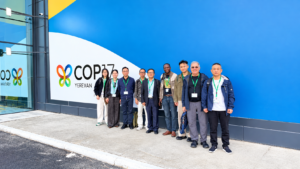
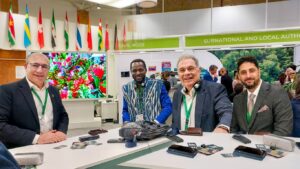
An international delegation on the ground
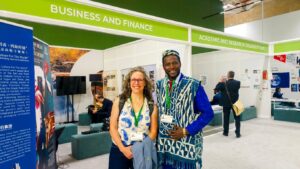
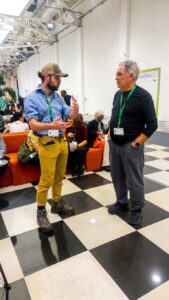
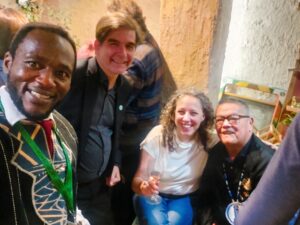
CED’s participation in COP17 stood out through the presence of a delegation of some twenty experts and partners from countries including Algeria, Cameroon, Canada, Colombia, China and Tunisia. This geographic diversity reflects the international reach of the CED network and its commitment to fostering the sharing of experience and cooperation among stakeholders working toward the sustainable development of destinations.
Throughout the conference, this presence provided an opportunity for meetings, discussions and the showcasing of initiatives that help bring together territorial development, biodiversity conservation and regenerative approaches.
A notable contribution to the Science Forum
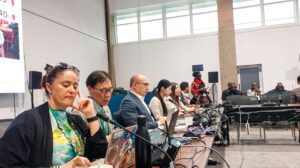
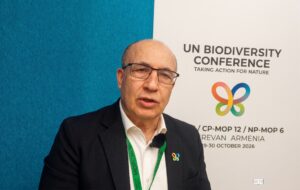
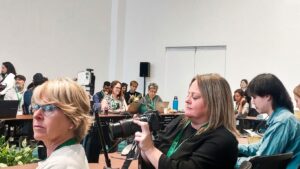
CED’s participation was also marked by a presentation by Dr. Jamel Gamra, CED Director for Africa, the Mediterranean and the Middle East, at the COP17 Science Forum.
Drawing on the findings of his doctoral research at the Université de Sherbrooke, his talk focused on territorial dynamic capabilities, an analytical framework that sheds light on how territories mobilize their resources, develop collective competencies and adapt their strategies in response to changes in their environment.
The research presented echoes concrete applications in Abitibi-Témiscamingue, Quebec, and in Tunisia, illustrating the value of this approach in supporting territorial development dynamics across different geographic and institutional contexts.
This contribution highlights a central issue for CED: strengthening the links between scientific research and destination support practices. To this end, CED has developed, since 2007, the System of Measures for Excellence in Destinations (SMED), a program based on diagnosis, stakeholder dialogue and the formulation of recommendations. The program aims to help territorial stakeholders better identify their strengths, address their challenges and determine opportunities for action to improve the management and sustainable development of their destination.
Bringing together scientific research, assessment tools and destination support is thus a key lever for turning knowledge into courses of action suited to local realities. The experiences shared by Dr. Gamra illustrate CED’s commitment to knowledge-based territorial engineering focused on practical application in the field.
A side event at the heart of Québec Day at COP17
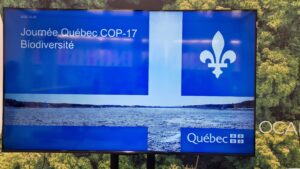
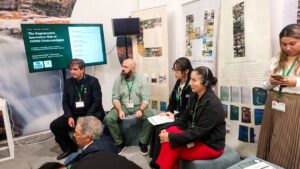
On October 26, 2026, on the occasion of Québec Day at COP17, CED organized a side event that was one of the highlights of its participation.
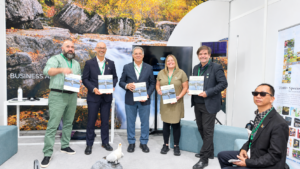
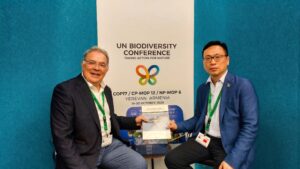
The event featured, in particular, the official launch of a new collective book published by CED’s Chinese partner, Straits Publishing & Distribution Group:
Taking Action for Nature: A Global Panorama of Innovative Approaches to Territorial Regeneration – 33 Success Stories, 4 Illustrations.
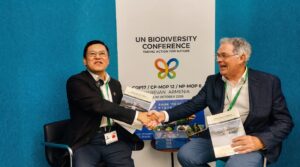
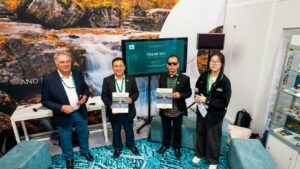
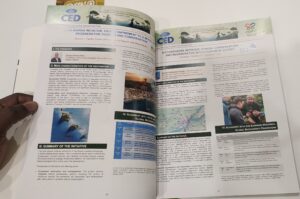
The result of a collective effort involving some thirty CED experts from 16 countries, the book brings together innovative experiences and approaches to territorial regeneration. It highlights initiatives that can inspire destinations and territorial stakeholders in their efforts to reconcile development, the enhancement of local resources and the protection of living systems.
The book will be available in French and English, in both print and digital formats. At the official launch, attendees were pleased to receive a complimentary printed copy, courtesy of CED’s Chinese partner.
Beyond its editorial dimension, this publication illustrates the ability of CED’s international network to document and share knowledge drawn from real-world experience, while fostering exchanges between territories and cultures.
A participation that opens new perspectives
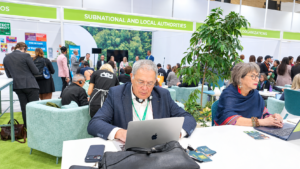

As COP17 draws to a close, CED’s participation in this edition will have helped raise the profile of its international network, showcase the scientific contributions of its experts and highlight territorial approaches that place nature at their core.
Spanning scientific research, destination support and the sharing of international experience, CED’s contributions demonstrate the complementarity between knowledge production and the implementation of operational approaches. This direction opens up prospects for continued collaboration and for strengthening the contribution of destinations to biodiversity conservation and territorial regeneration goals.

Relive the highlights of the CED delegation at COP17 in our recap video:
▶️ CED at COP17 – October 2026 Highlights
CED: guiding destinations toward excellence and continuous improvement.
#CED #COP17 #Biodiversity #TerritorialRegeneration #SustainableTourism #SMED
